₱0.00



After reading many books, I’ve somehow come to the conclusion that what makes a good book for me is a book that I’d want to see a movie adaptation of.
If a book makes me look for a movie adaptation, or makes me wonder how they’d show certain scenes if it were a movie, I just know it’s a good book for me.
After reading The Scarlet Letter, I just had to look for the movie version/s. There were two, and I highly recommend watching both. The Demi Moore one, though, gives a better resolution at the end.
The book also made me think and assess how I, or we as people, deal with the characters in the book. It will make you do a heart check and change the way you communicate grace to people who are considered shameful in our society today.
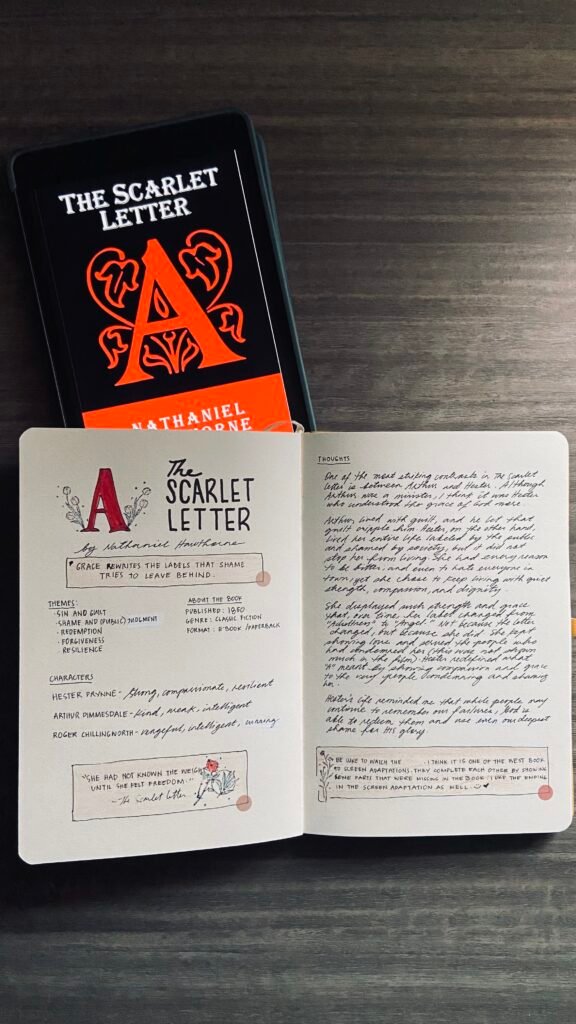
Well, I want to focus on each character and what I’ve learned from them.
Spoilers ahead, so read at your own risk.
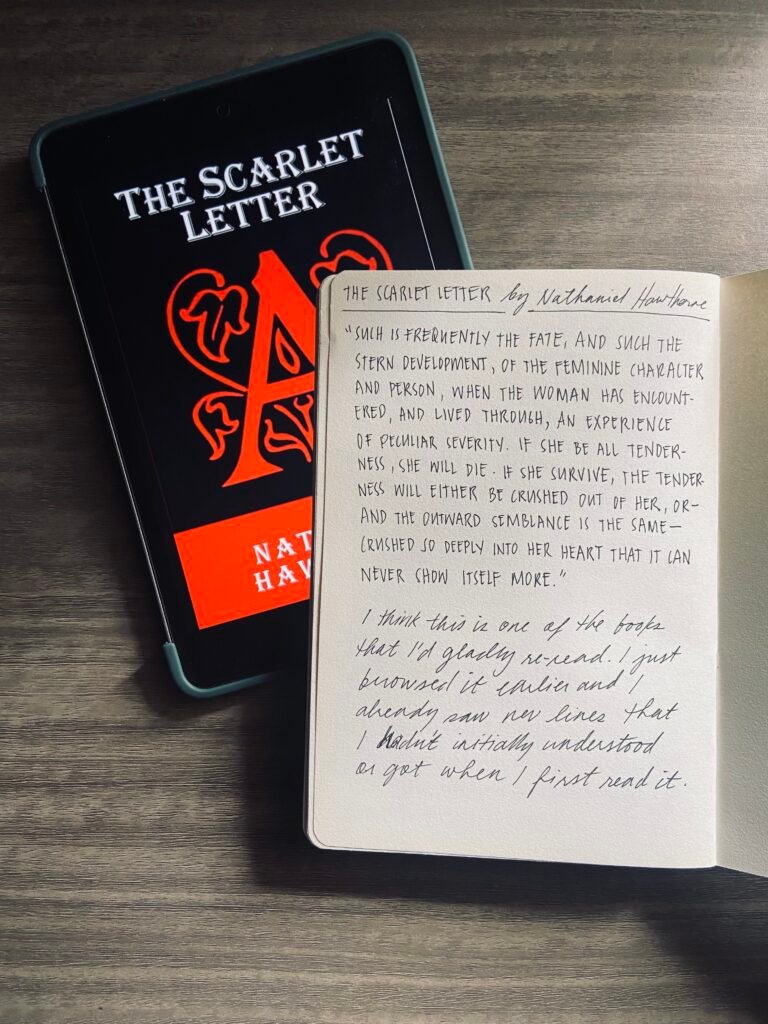
HESTER PRYNNE
On Bravery. She accepted her mistake of possibly committing adultery in the sight of other people without pulling other people down with her. She did not blame anyone. She did not prove them wrong either. She didn’t even defend herself, but she understood the society around her and faced the consequences.
The conservative people labeled her with a letter A on her chest, which she was expected to carry forever for her sin. But she made it beautiful and carried it, not as a source of pride, but as a way of accepting the punishment and showing that she was willing to carry it for as long as she and her child lived.
It must have been hard for a single mom like her to face that kind of public shaming every single day from the community.
On Grace. The reason she was able to live every day, facing the people, was that she eventually learned to live beyond their judgment. Even though every person around her reminded her of her sin every day, she did not allow their judgment to define her entire life.
Until the end, she showed how a person who has received grace can continue living with dignity, even when the people around them refuse to extend the same grace.
On Kindness. Having grace in her heart, she showed kindness to the very people who despised her. She did not return their persecution with hate, but helped every person who was in need. She supported and cared for those who got sick and provided services using her skills.
She extended grace and kindness to the point that the letter A changed its meaning in the eyes of the community, from Adulteress to Able, Admirable, and even Angel.
Oh, what a humbling moment for the entire town!
I can see this happening today. People despising others simply because they are different, or because their beliefs are different from theirs. We have lost the meaning of grace along the way, together with the kindness that should be extended to these people.
Oh, when I was reading this part, it made my heart hurt. It made me want to hug every hurt person I’d meet.
REVEREND ARTHUR DIMMESDALE
On Bravery. He’s quite the opposite of Hester. Being a beloved reverend in the community, he suffered emotional torment every day as he watched people love him dearly while these same people shamed Hester for the very same sin they had committed together.
He couldn’t admit that he was the secret lover. So, every day, he lived in guilt and physically hurt himself as a way of paying for his cowardice.
His inward struggle was eating him alive. He would always be seen looking gloomy and in agony over something people couldn’t understand. But in his heart, he had been carrying the guilt of being loved and admired when he knew he should also be held accountable for what he had done.
On Grace. The very same person who preached grace couldn’t accept it for himself. He, who should have understood that the Lord forgives, lived as though he had never been forgiven.
It took Hester’s words to remind him of the Lord’s forgiveness and grace and to help lift him out of his tormented state.
Many of us live in this state every day. We have been forgiven and should live under God’s grace, but instead, we live a beaten, dreadful life, feeling like losers when we should be moving towards victory.
On Kindness. He was kind, and his kindness towards people continued until the end of the book. But unlike Hester, whose kindness was driven by grace, Arthur’s kindness seemed to be driven, at least in part, by guilt.
I wonder how many times we do good things because we genuinely want to, and how many times we do them because we are trying to make up for something we feel guilty about.
ROGER CHILLINGWORTH
On Bravery. As Hester’s much older husband, he left her without any news of whether he was still alive. Many years had passed, and Hester thought he was dead.
He wasn’t a good husband to Hester. Though he did not need her, he was manipulative and used his intelligence to indirectly torment Arthur emotionally.
His focus was more on protecting his name and seeking revenge than acknowledging his own failures as a husband. He never admitted that he had done anything wrong against Hester. He seemed to think of her as something he owned, something that no one else should benefit from.
On Grace. He showed very little grace towards the people he believed had sinned against him. Although he did not direct his revenge towards Hester and Pearl in the same way he did towards Arthur, his actions were far from gracious.
He concealed his identity and used the situation to his advantage. He had the opportunity to let go of his bitterness, but he chose to hold on to it.
On Kindness. His kindness was rooted in revenge.
He did not immediately kill or expose the people whom he thought had sinned against him. Instead, he showed them kindness with hidden motives. He allowed these people to see him as a kind person so he could gain their attention and trust, without them knowing that he was the same guy scheming behind their backs.
We meet a lot of Rogers in life. People with hidden motives behind every act of kindness. And we have to be very, very careful to discern them because they can secretly torment us. Before we know it, all the energy and vibrance have been drained out of our lives because someone has been zapping them out of us, unknowingly, every single day.
THE PEOPLE
On Bravery. They were not afraid to point out sin. That is for sure. They were not afraid to punish sin either, publicly shaming people every single day.
They were brave enough to call out what was wrong in the people in their community. They were not afraid to confront people to their faces.
But were they brave enough to examine their own hearts? There is a difference between having the courage to point out what is wrong in others and having the courage to stand up for what is right, even when it requires humility and compassion.
On Grace. They certainly did not have much of this at first. They acted so pure and righteous to the point that they would shame and punish people who committed mistakes.
The sad part is that this still happens today. When we have received the grace of God, we should extend it to others so they can experience it too.
This is what Hester showed the people. Along the way, they began to see her differently and eventually learned to be more gracious towards her.
On Kindness. Again, the people were not kind at all. Because grace was not understood, being unkind to people who had sinned became the initial reaction of the community.
This changed when Hester showed kindness to them, even when all they had shown her was rudeness and public shaming. Eventually, the people learned grace and kindness from the very person they were shaming.
What a twist of events!
Sometimes, the people we least expect to show kindness to us are the very ones who show up when we are in distress.
A FEW MORE THOUGHTS
It took me a few chapters to really get into The Scarlet Letter because of the wording used at the beginning of the book. But once I understood the story, I couldn’t put it down.
I highly recommend watching the film adaptations, especially the one with Demi Moore. The movies fill in some of the beginning of the story that the book doesn’t immediately show. The Demi Moore version also takes a different route with the ending, giving the story a different resolution.
I think reading the novel first and then watching the movies is the perfect combination.
More than anything, this book made me think about how we deal with sin, shame, and the people around us.
We can be quick to point out the sins of others but slow to examine our own hearts. We can preach grace but struggle to receive it ourselves. We can even show kindness while carrying selfish motives.
And perhaps that’s what stayed with me most after reading this book.
Are we becoming people who understand grace, or are we simply becoming better at identifying the sins of others?
May this book challenge us to extend grace and kindness to people, whether they respond to us with kindness or rudeness. Because that is how someone who has received and truly understands the grace of God should live.
Read another book review: