₱0.00


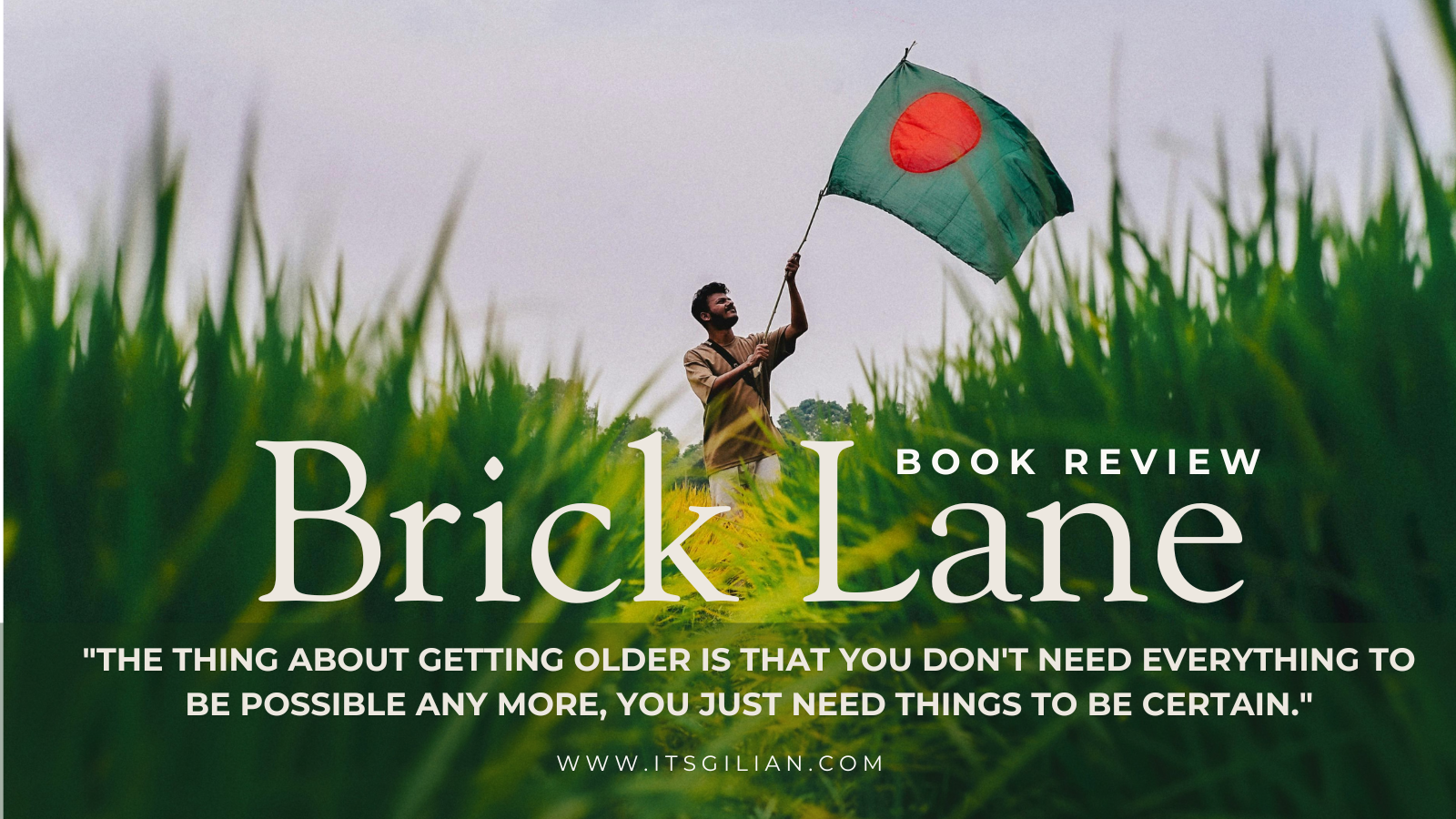
When I started reading Brick Lane, I found myself making several personal adjustments like adapting to its genre, setting, and writing style.
Genre
Most of the books I read are usually detective and suspenseful ones so I had to slowly read and understand what was going on and how to read a book about life in general. I guess when you are used to detective stories, your mind keeps guessing who the culprit is at the beginning, and there’s none of that element here. So, I kept reading to follow how the characters will respond to what was happening in their lives. It’s interesting and I’m learning how to read this kind of genre.
Setting

This book is set in both Bangladesh and London. I was amused by how some practices of Bengali culture and traditions resemble those of other Asian cultures. It also made me realize that I had never read a novel set outside the Western world before. Most of the books I have read were either American or English. That is why encountering Asian culture in Brick Lane felt both funny and relatable. This experience has inspired me to explore Philippine literature and books from other countries as well.
Writing Style
I thought the novel was translated into English because a few lines felt awkward and strangely put together. I assumed the original phrases were difficult to translate directly, so I tried to understand them as expressions in their original language. However, when I looked it up, I found that it was actually written in English. So, probably it was the author’s style of writing.

Another part of the book that frustrated me, not because it was not good, but because it was difficult to read, was the letters from Nazneen’s sister. Since her sister doesn’t speak English properly, the author intentionally wrote the letters with grammatical errors. This would have been fine if there were just one, maybe three, or even five letters at most. But no—the exchanges sometimes stretched to 20 pages or more, and I had to skip those parts. I understand the purpose of the letters, but the story would still stand without them being that long. Reading them gave me a headache. It wasn’t just the incorrect word placement; the letters were written exactly as someone with broken English would speak, which not only slowed down my reading but also made it a real struggle.
That’s just my personal experience, though. Maybe it would be different for you. If you find it the same, I suggest skipping parts of the letters as long as you get the general idea.
In Summary
This novel follows the life of Nazneen, a young woman from Bangladesh who moves to London for an arranged marriage with Chanu, a much older man. Initially, she quietly accepts her new life, but as time passes, she begins to question everything; her marriage, her culture, and her own desires. Through friendships, love, and personal struggles, she gradually finds her voice. Brick Lane is a story of identity, independence, and the search for a true sense of belonging.
(Skip this part because it might contain spoilers. )

I heavily annotated this book, and looking back at each marked page, the lessons are still overwhelming.
Womanhood. In cultures like Bangladesh, women do not have the same rights and privileges as men. The book provides an inside look at this reality and beautifully portrays the struggle to break free from a system that has confined women for so long. The ending was unexpected for me at first, but I had to admit that it was the most fitting closing for the story.
Racism & religious discrimination. The novel highlights the immense struggles of living as a foreigner in another country, especially for those working overseas. This was even more challenging for the characters, as they were Muslim during a time when discrimination against their religion was at its peak.
Why I bought the Book

I bought Brick Lane from Book Sale, and what further convinced me to get it was when I saw a boarding pass tucked between its pages which was left behind by its previous owner. It was a small yet meaningful detail, exactly the kind of connection Days at the Morisaki Bookshop describes when it talks about how secondhand books transcend time, carrying traces of those who read them before. Interestingly, I had no prior knowledge of Brick Lane’s topic before picking it up so it was a bit exciting for me to read it.
Trigger Warnings
The book may contain themes of racism, death, discrimination, forced marriage, drug use, and affairs.

If you enjoy thought-provoking stories about identity, culture, and womanhood, Brick Lane is definitely worth a read. Have you read it? Share your thoughts in the comments section. I’d love to hear your insight of the book. And if you haven’t, does this sound like a book you’d pick up in a bookstore to read?
Intereted in reading the book?
You can Buy the book here.